Electric momentum has split the world in two
On paper, the global EV train is barrelling down the tracks at a respectable clip. Around 1.85 million plug-in cars rolled off dealer lots worldwide last July alone - that's a solid 9% increase over the same month last year, pushing our 2026 year-to-date total to a massive 11.5 million vehicles. But if you stand on a street corner in Detroit versus one in Paris or Shenzhen, you would swear you were living on entirely different planets.
Interestingly, the global transition to electric power has not stalled out at all - it has fractured into a wild, localized schizophrenia where regional government checks, shifting regulations, and buyer quirks dictate who is plugging in and who is running back to the petrol pump.
The electric honeymoon has officially come to an end in the US. July sales crashed 27% year-over-year down to 140,000 units, pulling the seven-month total down to 900,000 cars. After federal EV tax credits met their demise back in 2025, buyers suddenly remembered how much they dislike paying full retail price out-of-pocket.
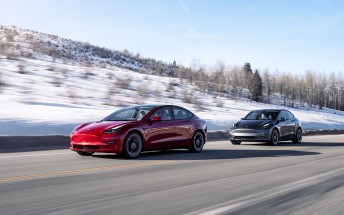
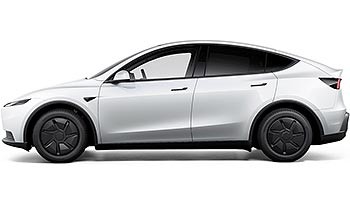
When a benchmark family crossover like the Tesla Model Y comes with a base sticker price of $41,380, losing a sweet $7,500 federal incentive stings. And it stings really badly. Without that government cash greasing the wheels, buyers are dragging their feet.
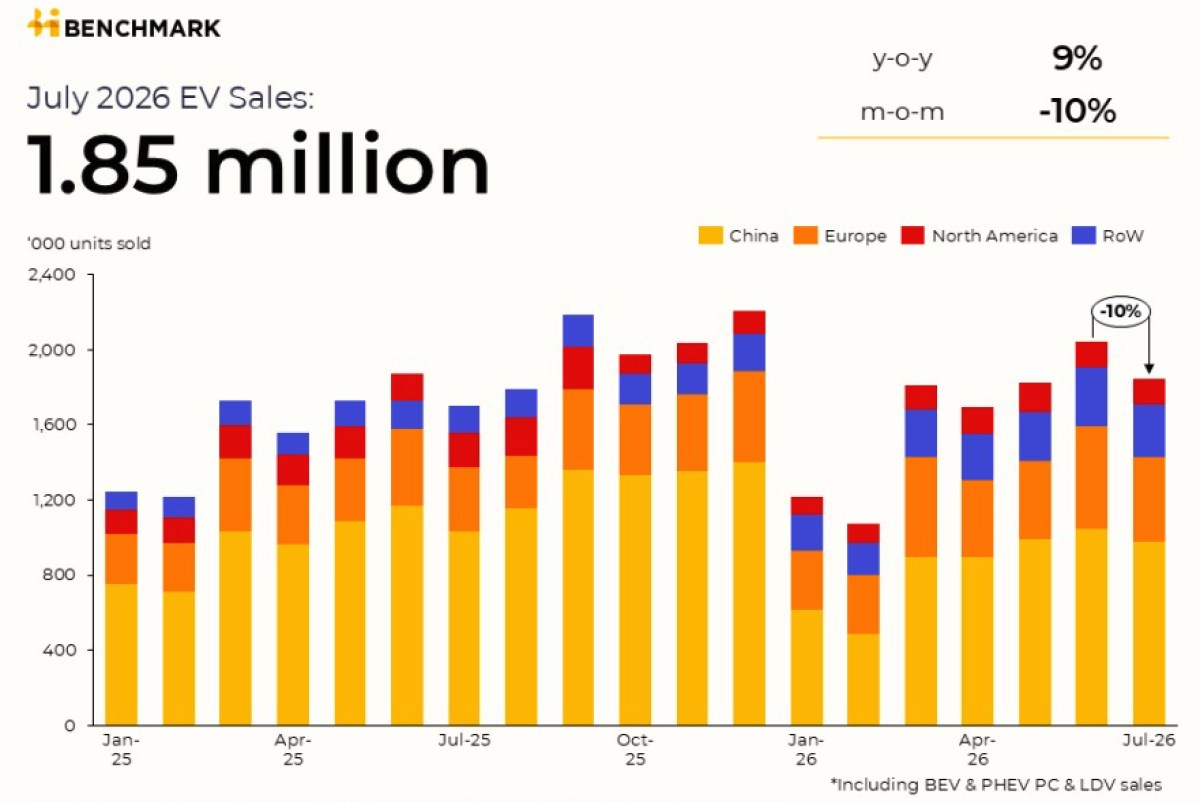 Source: Benchmark
Up north in Canada, the playbook looks completely different. Ottawa has quietly opened the sluice gates to affordable Chinese-built EVs, establishing a lower-tariff quota of 49,000 vehicles for the year. By allocating over half of the first 24,500 import permits before August even wrapped up, Canadian regulators are letting cheaper electrons flow across the border, with the US market sulking in the shadow of rolled-back emissions targets.
Cross the Atlantic, and the picture flips completely on its head. European drivers snapped up 450,000 plug-in vehicles in July - that's a 33% bump compared to last year - despite the usual mid-summer holiday lull dragging month-on-month volume down 17% from June. European year-to-date sales have already rocketed 28% to hit 3 million cars. Why the rush? Because European lawmakers understand a basic truth about car buyers: if you want them to swap piston-pounding internal combustion for battery power, you have to sweeten the pot.
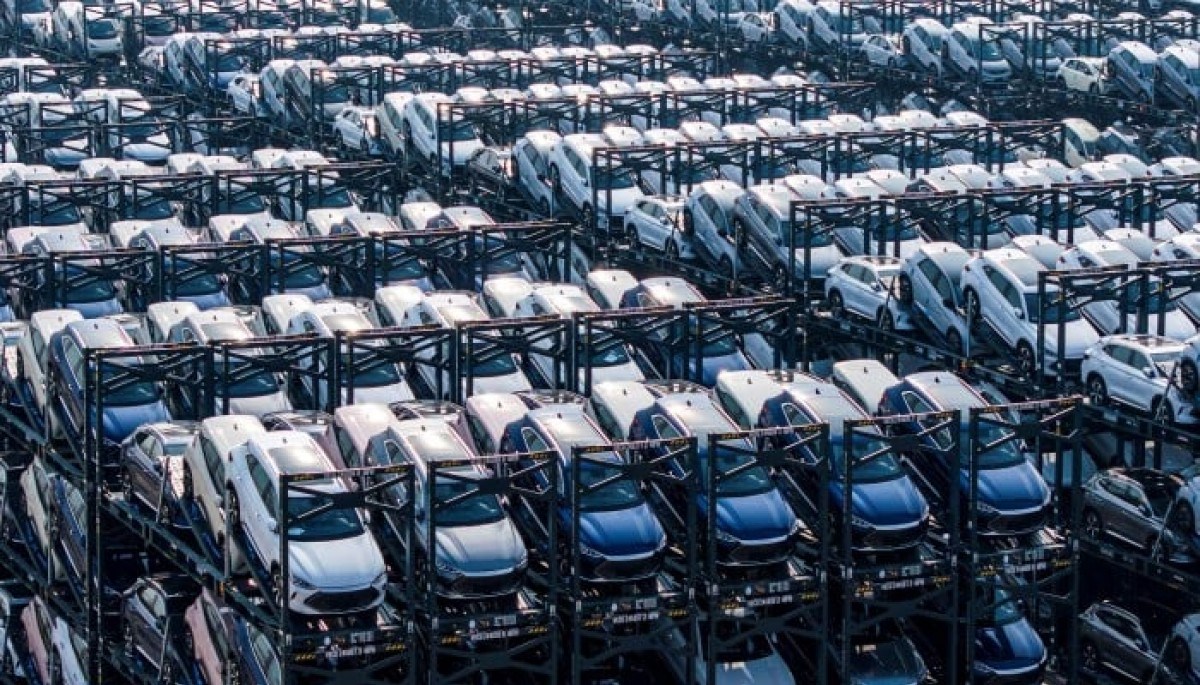
France led the European charge with an 81% year-over-year jump, pushing pure electric market penetration to a record 37%. Germany jumped 46%, and the UK saw a 43% boost. Down in Spain, where EV sales were already cruising along up 34% for the year, the government opened its new Auto+ incentive scheme in early August. Buyers can snag up to $5,300 toward a new electric car, with applications backdated all the way to January 1.
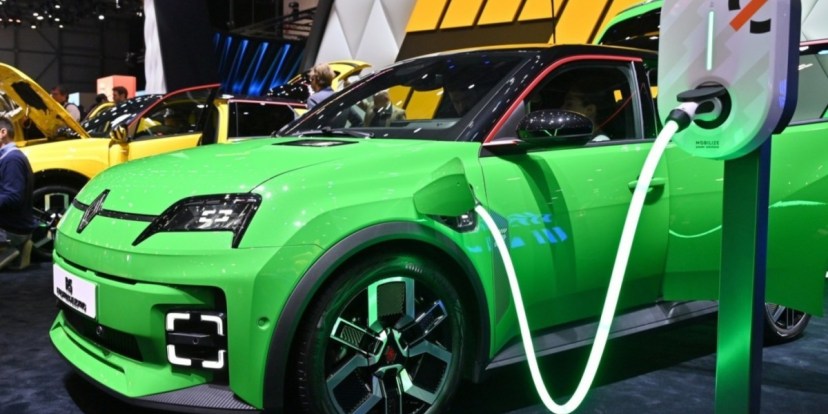
That kind of financial perk changes the buying math entirely - a compact urban commuter like the reborn Renault 5 E-Tech - starting around $29,300 - becomes a no-brainer against bulkier petrol rivals or larger midsize haulers like the Volkswagen ID.4.

Then we have China, the undisputed champion of the battery world, where headline statistics appear to be lying through their teeth. On paper, Chinese sales of "New Energy Vehicles" fell 5% in July to 980,000 units, pulling year-to-date volume down 12% to 5.9 million. But if you look at the powertrain breakdown, a fascinating shift becomes painfully clear: Chinese drivers are abandoning internal combustion engines entirely.
In July, pure battery-electric vehicle sales in China actually grew 6% year-over-year. What dragged down the overall numbers was a sharp 21.1% drop in plug-in hybrids and a 16.5% decline in extended-range EVs. Pure petrol and diesel cars did not stumble - they cratered, plunging 44%. Pure electrics and plug-ins now routinely claim anywhere from 50% to 65.1% of total retail car sales in China. If a car has a tailpipe and a gas tank, local buyers are treating it like a museum piece.
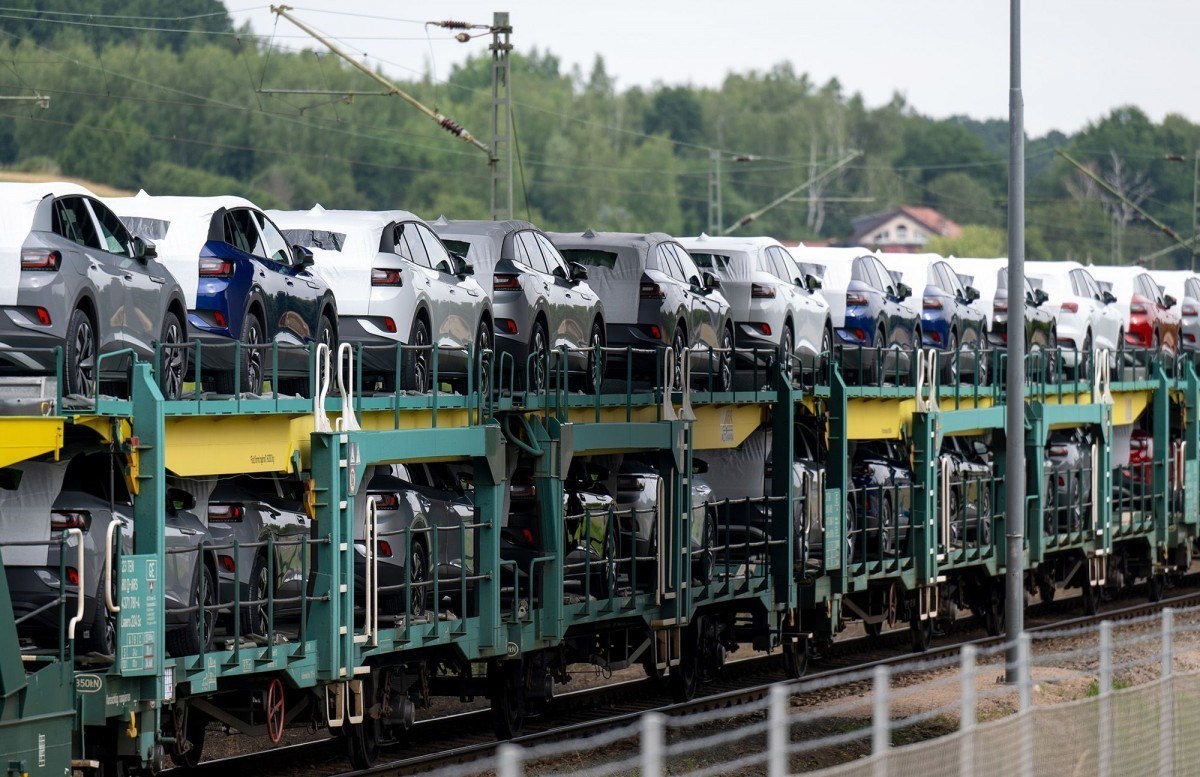
Because Chinese domestic demand for hybrid transition cars has cooled off, Chinese automakers are pivoting overseas with ruthless efficiency. Over 500,000 electrified vehicles were exported from Chinese ports in July alone - another record-breaking monthly milestone.
That massive wave of exported machinery is finding a new audience in developing markets across South America, Asia, and Africa. In Benchmark's "Rest of the World" category, July sales nearly doubled with a 97% leap to 280,000 units, pushing their year-to-date total up 96% to 1.7 million.
Global EV sales:
| Region | Jul-26 | year-on-year | month-on-month | Year To Date | YTD-26 vs YTD-25 |
|---|---|---|---|---|---|
| China | 980,000 | -5% | -7% | 5.9 | -12% |
| Europe | 450,000 | 33% | -17% | 3.0 | 28% |
| North America | 140,000 | -27% | -1% | 0.90 | -18% |
| Rest of World | 280,000 | 97% | -11% | 1.7 | 96% |
| Global | 1,850,000 | 9% | -10% | 11.5 | 4% |
The data is clear: we are not looking at an electric vehicle slowdown. Quite the opposite in fact - it is a massive geographic realignment of momentum. Where subsidies vanish, and fuel regulations soften - as they have in North America - muscle memory pulls nervous buyers back toward gas-guzzling familiarity.
But where incentives stay in play, affordable EVs flood the market, and electrification is accelerating at full throttle. The electric train is moving faster than ever - but it is leaving a few major stations behind. It'll be interesting to see if the American market ever catches up, or if it turns into a gasoline oasis.
Related


Reader comments
Nothing yet. Be the first to comment.