Best heritage revivals from Paris Motor Show 2026
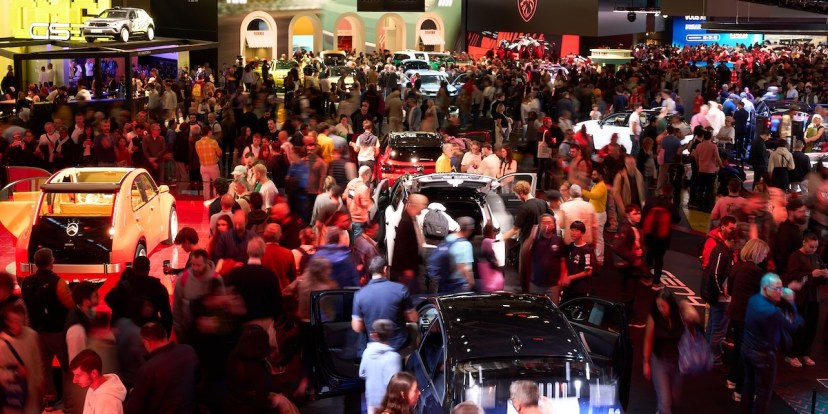
I learned something last week that I actually had no idea about - Paris has been hosting car shows since 1898, when a handful of first horseless carriages gathered in the Tuileries gardens and tried to convince very skeptical Parisians that the horse was a relic. 128 years later, the Paris Expo Porte de Versailles was once again Europe's biggest automotive stage, and I spent the opening days walking its halls with a notebook, sore feet and a growing sense of déjà vu. Almost every stand that mattered had raided its own archive. The 2026 edition of the Paris Motor Show has turned into a celebration of nostalgia, and the cars that stole the spotlight were the ones that remembered why people fell in love with their brands in the first place.
Unfortunately, that retro wave is not simple sentimentality. European carmakers are squeezed between Chinese rivals with cheaper batteries and faster development cycles, and customers who still don’t believe that a 4,410 lb electric crossover is the answer to every question. Heritage is the one weapon Beijing and Shenzhen cannot copy - you cannot buy 75 years of folklore. So Stellantis brought a parade of concepts from Alfa Romeo, Citroen, DS, Fiat and Vauxhall, Renault Group answered with Alpine and a pair of nostalgic Renaults, and the result was a show that felt like a classic car auction - with charging ports.
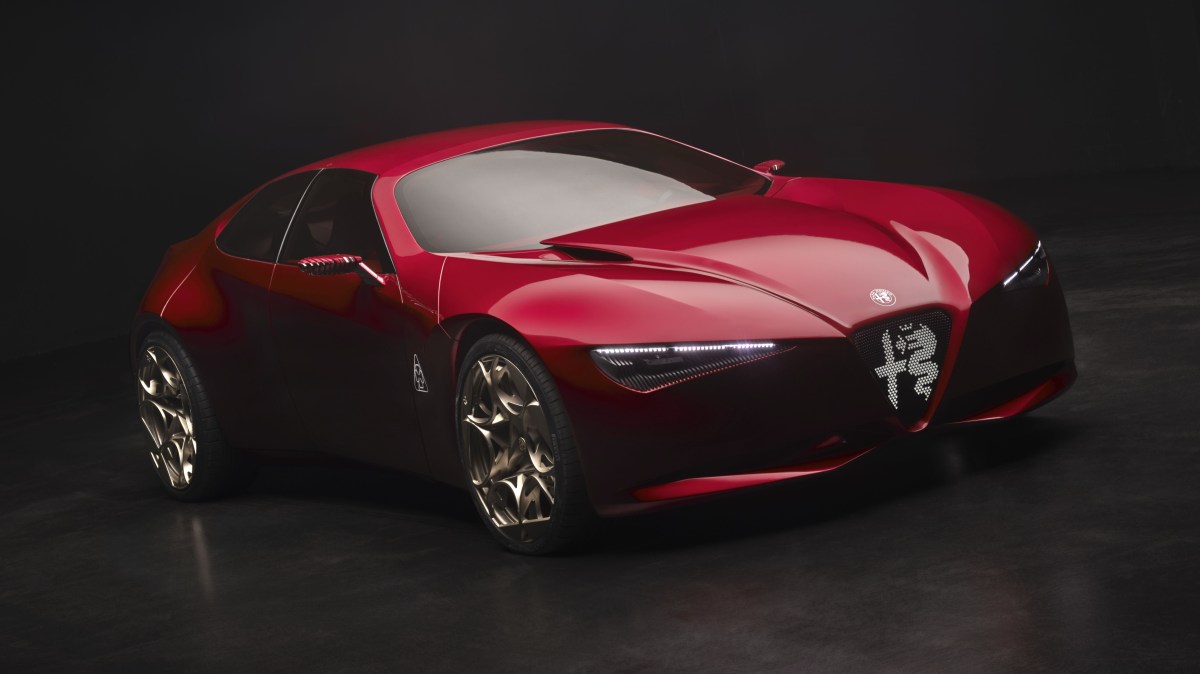
Alfa Romeo's contribution is the Cuorerosso - "red heart" - a beautiful 2+2 fastback that the brand calls a manifesto for how it will handle electrification. Alfa hasn't released official dimensions, but it says the concept is similar in size to the Giulia, which measures 182.8 inches long and 73.2 inches wide. That puts the Cuorerosso almost in BMW i3 territory, but with a roofline that slopes away like a Riva speedboat's stern. It has the long-hood stance that Alfa used to do better than anybody, and in the metal (or fiberglass in this case) it looks so much better than the bloated crossovers that dominated the halls around it.
The twist is under that long hood. Instead of a battery pack, the Cuorerosso is said to use a hybridized version of the 2.9-liter twin-turbocharged V6 that already powers the Giulia and Stelvio Quadrifoglio, where it produces around 520 hp. A "manifesto for electrification" that keeps a Ferrari-derived V6 at its core is a bit of a contradiction - and a relief, if I dare to say it. It suggests that Alfa wants to keep petrol at the heart of its performance cars for years to come, with electrons used as a seasoning rather than the main course. No power figures, no battery capacity, and no production timeline were announced, but the message from Arese was clear as day: the heart is still red, and it still runs on unleaded. For now at least.
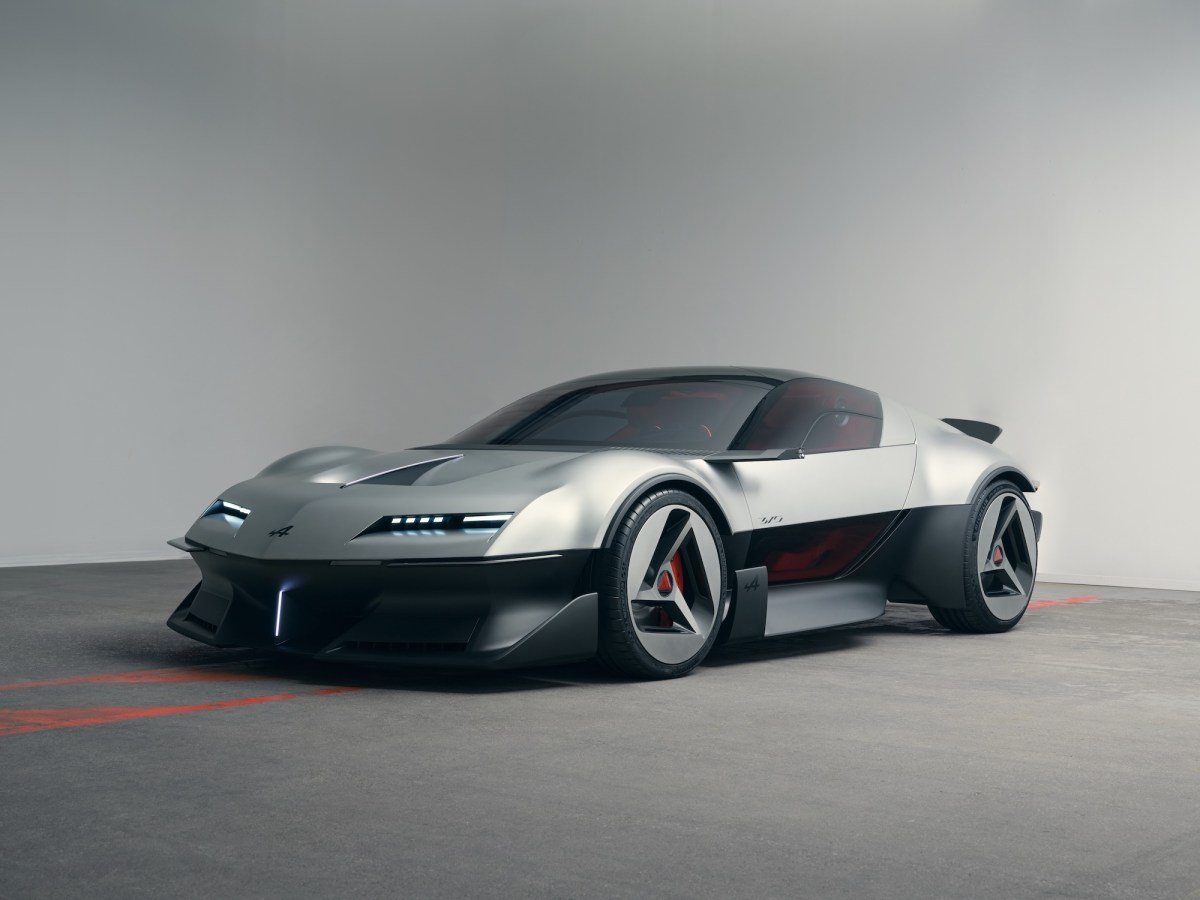
Alpine A310 Vision has bigger shoes to fill, because it has to sell a whole new architecture. It sits on the Alpine Performance Platform that will underpin the next-generation electric A110 and the hyperactive Renault 5 Turbo 3E - the latter a 400 kW (540 hp) pocket rocket with in-wheel motors and limited to 1,980 units only. The concept reimagines the angular A310 of 1971, borrowing cues from both the original four-cylinder car and the wide-arched V6 that followed in 1976. Styling director Antony Villain's team kept the arrowhead silhouette but stripped out the rear seats, turning the old 2+2 into a strict two-seater. The party piece is a pair of "pop-down" headlights that drop into view when the car wakes up - a clever modern nod to the pop-up lamps that defined wedge-shaped sports cars of that era.
The proportions are quite silly. At 179.1 inches long, 79.9 inches wide and just 46.5 inches tall, the A310 Vision is longer than a Porsche 911 Carrera (177.9 inches), 7 inches wider and nearly 4.72 inches lower. Next to the Alpine A110, it looks like a stretched, flattened alien. Officially, it is a one-off, and Alpine won't quote power or range. But the platform is built to put the battery behind the seats and in the central tunnel rather than under the floor, so the driver sits low and the weight stays between the axles. If a few wealthy collectors start writing checks, a small production run would be easy to justify.
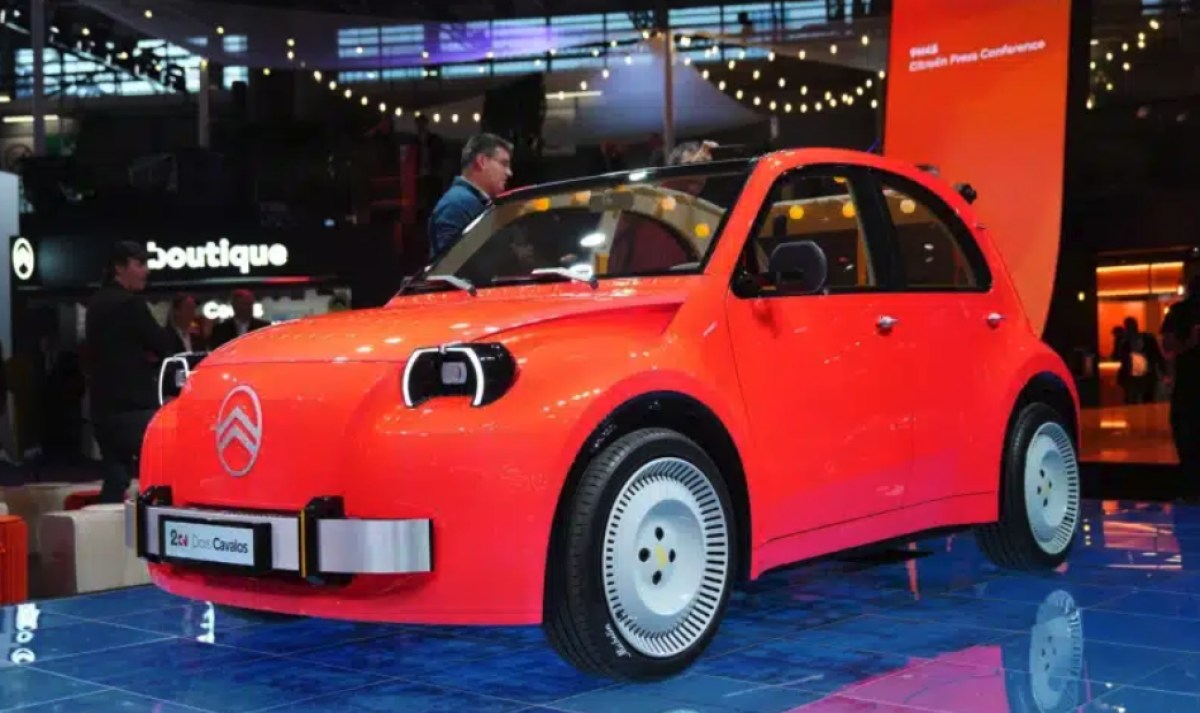
Then we come to the real star of the show. The new Citroen 2CV has been rumored for so long that it became something of a running joke, yet here it was, shown as a concept in the very city where the original made its debut at the 1948 Paris Salon. The first 2CV was born from Pierre-Jules Boulanger's famously eccentric brief - carry two farmers and 110 lb of potatoes at 37 mph, and cross a plowed field without breaking a basket of eggs. It went on to sell nearly four million examples by 1990. The new car is a close preview of a production EV due in 2028, and it is “cheerful” - friendly headlights sit on the wheel arches, a fabric roof rolls back like a sardine tin, and its profile is instantly recognizable.
Inside, we have tartan bench seats, an "umbrella handle" gear selector that echoes the original's dashboard-mounted shifter, a single-spoke steering wheel and mushroom-shaped pedals. But the numbers matter even more. Citroen is targeting a weight of just 2,200 lb and a price of $17,600 ($17,510). That would undercut the new Renault Twingo E-Tech, which weighs around 2,646 lb and measures 149.2 inches long. It would also undercut the Dacia Spring, which is one of the few EVs that already sneaks under a tonne. Citroen hasn't announced the 2CV's dimensions, battery or range - if they pull it off, the 2CV will be the cheapest new car in Europe, and the most charming EV on sale anywhere.
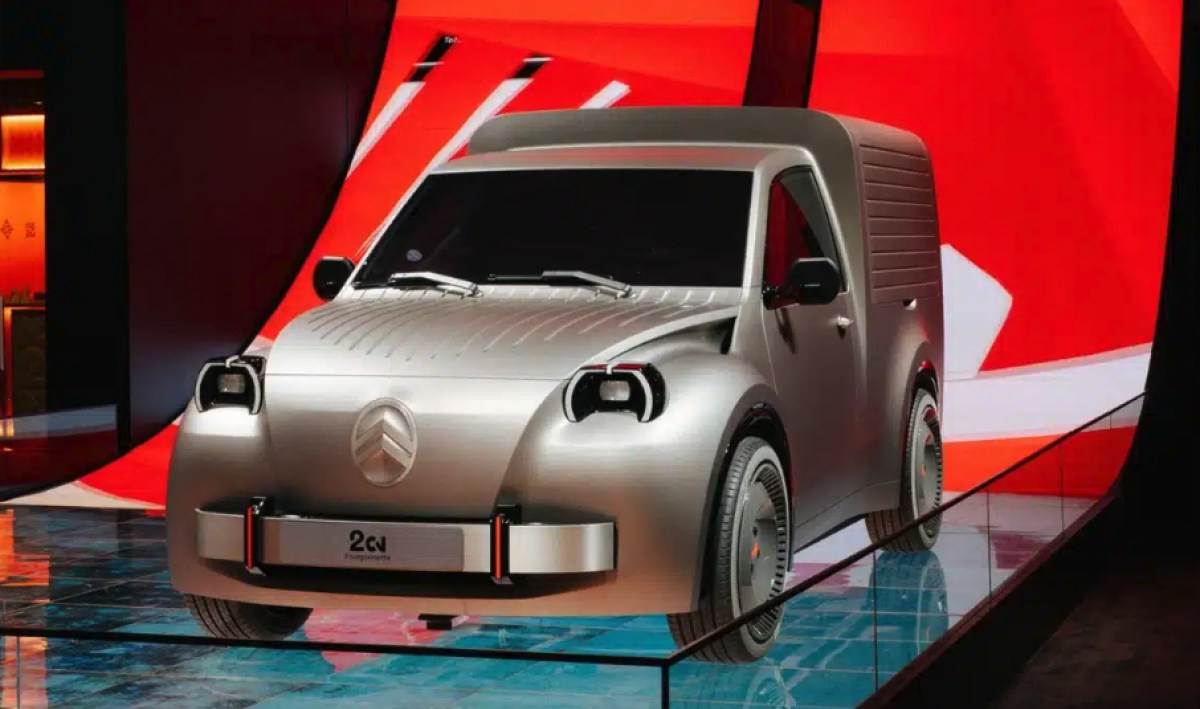
Citroen had one more trick up its sleeve - the 2CV Fourgonnette, a commercial variant that revives the name of the original 2CV van built between 1951 and 1977. Those corrugated little vans delivered bread, post and plumbing supplies across rural France for a quarter of a century, and they were as much a part of the countryside as poplar-lined roads. The new version is identical to the 2CV concept up to the B-pillar, behind which a boxy cargo section grows out of the body, accessible through a flip-up side panel and twin rear doors.
For now, Citroen calls the Fourgonnette a "passion project", and it has not been approved for production. That is a shame, because it makes a lot of business sense. Urban delivery fleets need small, cheap electric vans that can slip down the narrow streets without blocking traffic, and a van that shares almost everything with a high-volume city car should not cost a fortune to engineer. A baker's van with a smile on its face would also be the best advertising Citroen could ever buy.
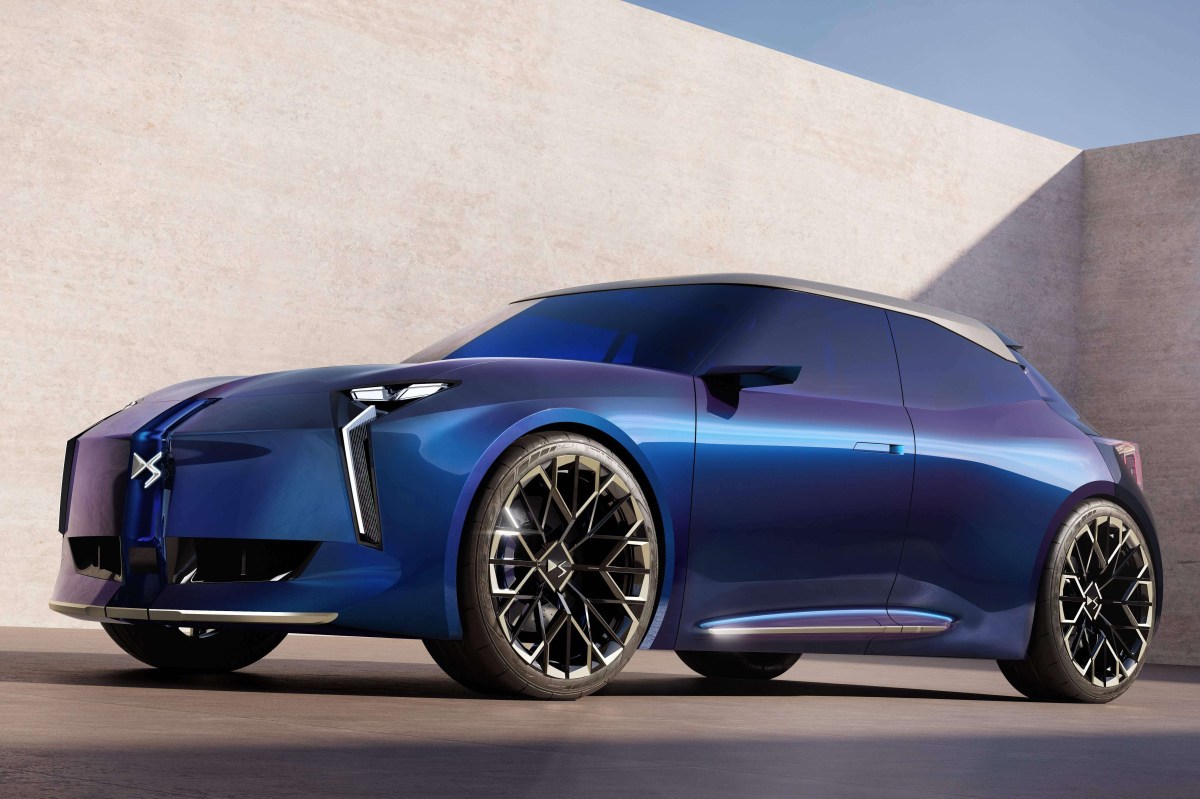
DS Automobiles, meanwhile, came to Paris to admit a mistake. The original DS3 of 2009 - then still wearing a Citroen badge - was a stylish supermini, with a floating "shark fin" B-pillar, a contrasting roof and personalization options that made it a genuine Mini rival. Its replacement, the DS 3 Crossback of 2019, turned the car into a small crossover, and the buyers simply walked away. The F3VER concept (read it as "fever") brings the hatchback back, previewing a supermini to be called Nº3, with styling cues lifted directly from the 2009 original.
The original DS3 was 155.4 inches long, 67.5 inches wide and 57.4 inches tall, which put it right above the new three-door Mini Cooper (152.6 inches). DS hasn't confirmed the F3VER's dimensions, but it is expected to stay in that same compact bracket. The concept on the stand was largely a styling exercise - a fully furnished version with a complete interior will be shown next year, with the production car following shortly after. The real question is whether a premium supermini can still make money in a segment where margins are very thin. DS needs a hit, and it is betting that a good-looking hatchback will do better than another anonymous crossover.
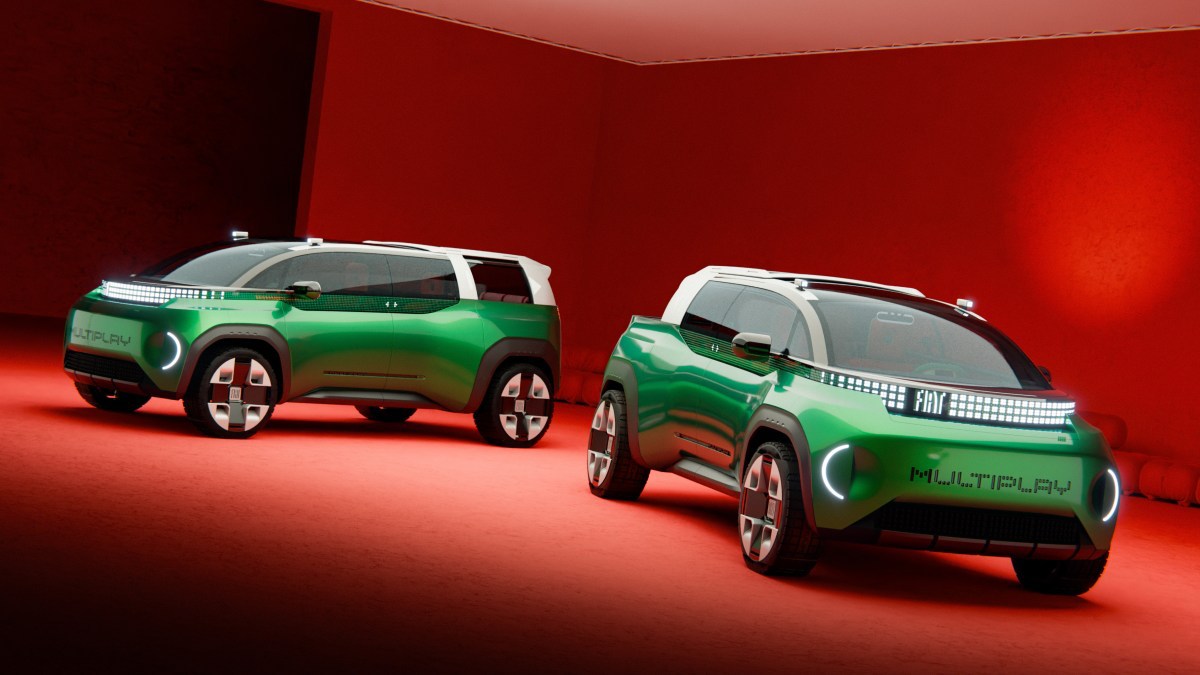
Fiat brought two concepts to Paris, and both of them were positively odd. The Multiplay takes its cue from the 1998 Multipla - a car that was once voted among the ugliest of its era and has since matured into a cult classic. The original, penned under Roberto Giolito (who later designed the 2007 Fiat 500), packed six seats in two rows of three into a body only 157.2 inches long and 73.7 inches wide. It was a clever piece of packaging hidden behind a face even a mother would struggle to love. The Multiplay borrows its bubble-like cabin and raised lighting, but adds a trick no MPV has ever pulled off.
A sliding rear roof section retracts electronically, transforming the Multiplay from a tall people-carrier into a compact pick-up. It's the sort of idea that sounds ridiculous until you picture a weekend trip to the garden center with a potted olive tree poking out of the back. Fiat has given no technical details and hasn't confirmed whether the Multiplay previews a production car. A moving roof structure brings headaches with sealing, crash rigidity and weight, but it is also proof that Turin still has some mischief left in it. Fiat built its reputation on cars that solved real problems in unexpected ways, and the Multiplay is that philosophy in its purest form.
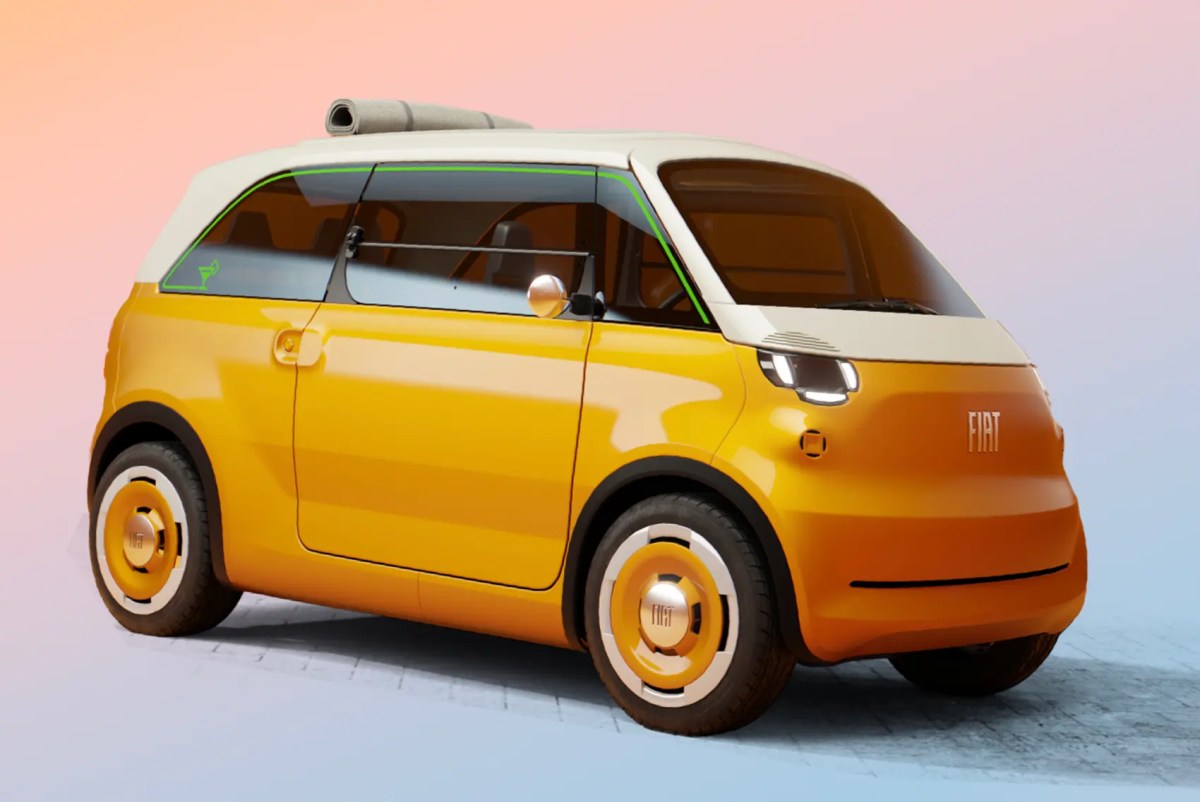
The second Fiat, the Multiplina, is far more likely to reach showrooms. It is a four-seat microcar based on the Topolino's platform, reworked for more interior space and a larger battery, and it revives the styling of the 1956 600 Multipla - a 139.4 inches mini-MPV that squeezed six people into a footprint smaller than a modern supermini. The Multiplina has a similar footprint to its ancestor, which makes it considerably larger than the Topolino, which is 99.8 inches long - or short.
The key difference is regulatory. The Topolino is an L6e light quadricycle, capped at 28 mph and with a 5.4 kWh battery good for about 47 miles. From 2028, the Multiplina will be built to L7e heavy quadricycle rules, which allow up to 15 kW and a top speed of up to 56 mph - fast enough to leave town and venture onto a ring road. Fiat hasn't confirmed battery size or range, but it promises the bigger pack will go further. There is a catch, though: in markets like France, to drive L7e vehicles you need at least a B1 license, which means the teenage buyers who made the Citroen Ami and Topolino a hit won't be able to drive it. It's a more grown-up microcar, but it may lose its youngest fans in the process.
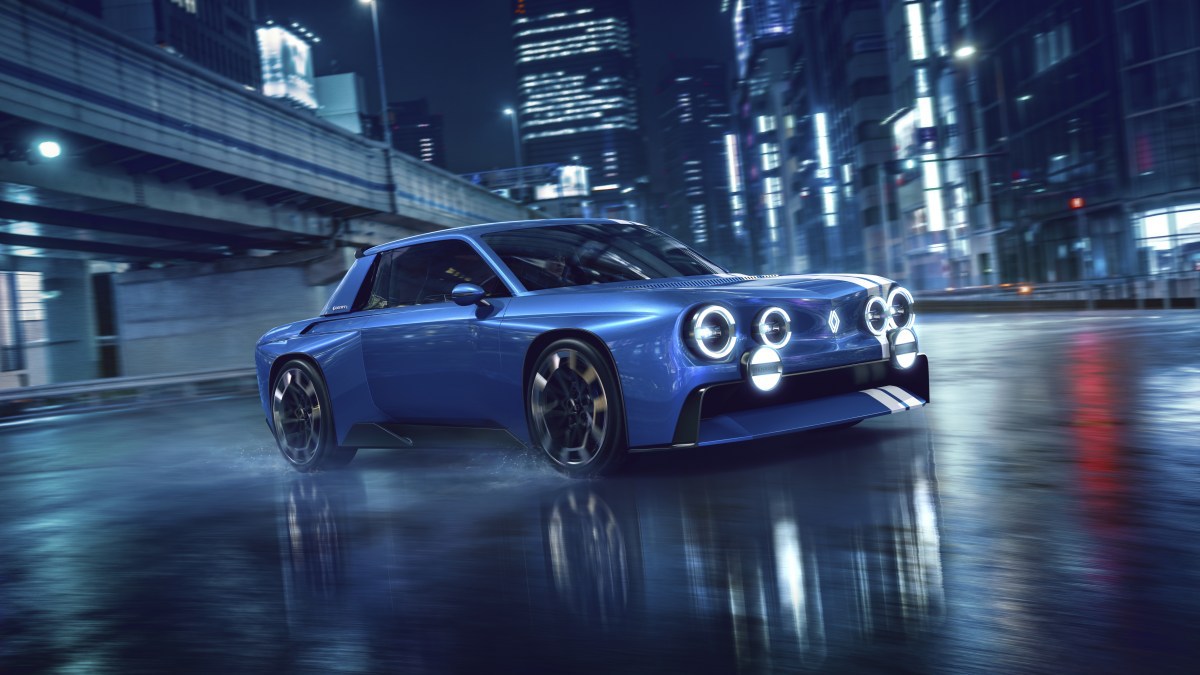
Renault 8 Gordini concept was shown a few weeks ago, but seeing it under the Paris lights is a different experience. The original Renault 8 arrived in 1962 as a humble rear-engined family saloon, until engineer Amédée Gordini got his hands on it. His tuned version - barely 100 hp from a small four-cylinder hanging out behind the rear axle - went on to dominate rallies and started the world's first single-make racing series. Its look was unforgettable: four round headlights, bright blue paint and twin white stripes running from bumper to bumper.
The concept copies that look perfectly, but replaces the rear-mounted petrol engine with an electric motor producing 270 hp. That is more than the Alpine A290 hot hatch (220 hp) and nearly three times as much as the original. Sadly, Renault insists that the 8 Gordini is strictly a one-off destined for the brand's new museum in Flins, the former assembly plant. That is a great pity, because a quad-lamp electric saloon with a blue paint job would sell easily to enthusiasts who grew up with posters of rally cars on their bedroom walls. Renault says some of its design ideas could appear on future production models, and I would be surprised if they don't.
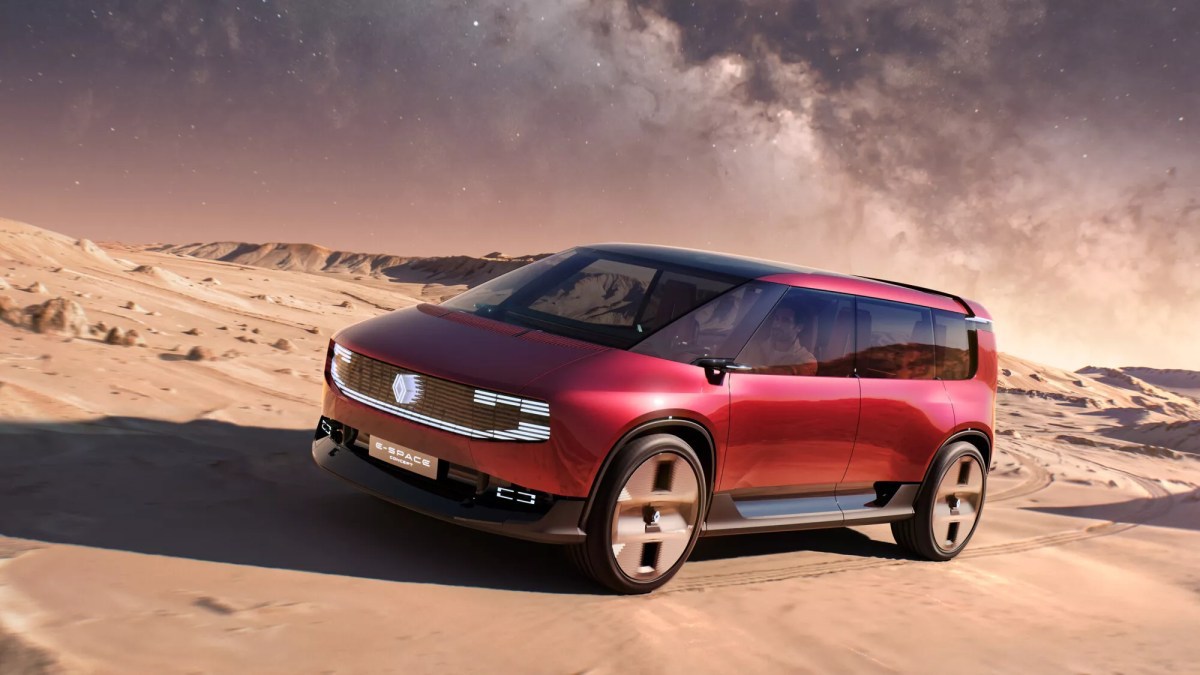
The E-Space was the most interesting Renault in Paris, because it touches on a real gap in the market. The original Espace of 1984, developed with Matra and built in Romorantin, was the first true European people carrier. At 167.3 inches long, it created a segment that defined family motoring for two decades, before SUVs pushed the MPVs into irrelevance. Today's Espace is a seven-seat crossover in all but name, which makes this concept feel like an attempt to resurrect the genre. The steeply raked windscreen is said to mimic the nose of France's TGV high-speed trains, and the rear spoiler references the roof bars from the Mk3 and Mk4 Espaces.
Inside, the E-Space seats six across three rows, and the middle row can swivel and fold flat to form a table for those in the third row. It is the kind of clever cabin MPVs used to have before carmakers decided families wanted fake skid plates instead. Renault hasn't released powertrain details, but electric drive suits the MPV perfectly - a flat floor and no transmission tunnel mean more space for people and their luggage. The Volkswagen ID. Buzz has already proven there is demand for practical electric people movers, despite a hefty price. Renault says it will "explore possible futures" for the E-Space, which translates to "we are waiting to see who claps". I clapped.
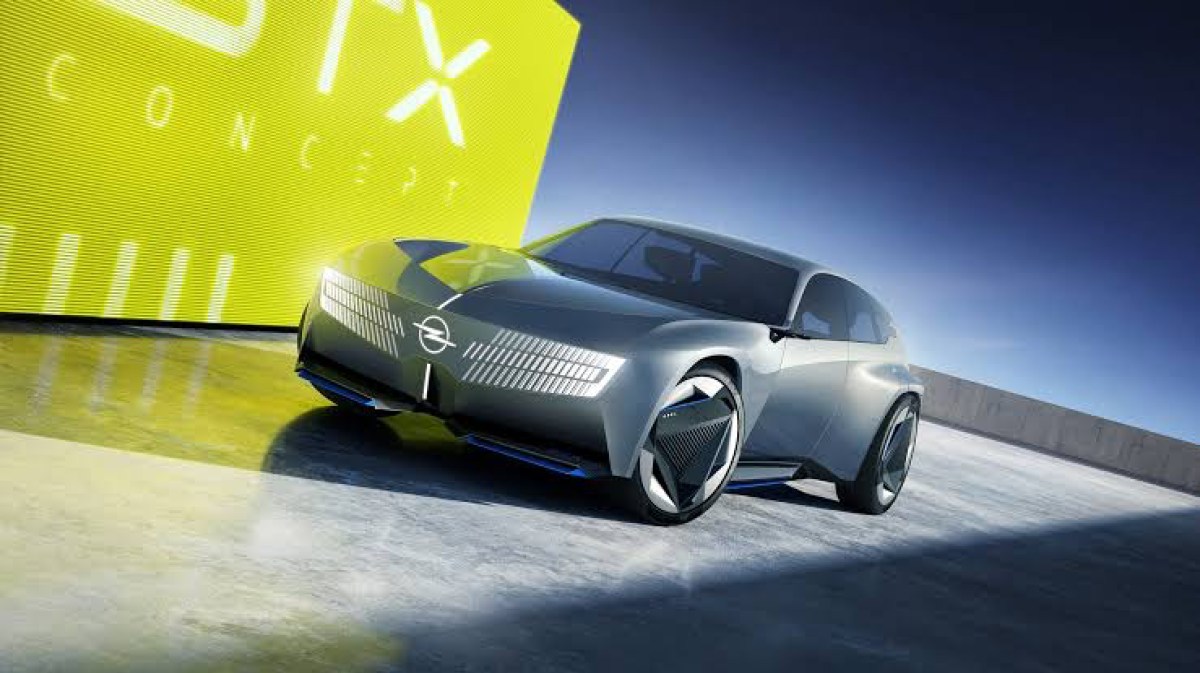
Opel STX - short for Sports Tourer Experimental - was the most radical design on the Stellantis stands and the one with the clearest link to an actual product. This low, streamlined estate previews the next Astra Tourer, and it introduces Vauxhall's simplified new logo along with a "Vizor" front end that pulls the headlights and badge into a single black band. It looks lower and leaner than any Astra estate before it, with a roofline that seems to have been shaped in a wind tunnel rather than on a spreadsheet.
The most current Astra Sports Tourer is 182.8 inches long on a 107.6 inches wheelbase, roughly matching its Peugeot 308 SW cousin (182.5 inches), while the Volkswagen ID.7 Tourer is in another league at 195.3 inches. Opel hasn't revealed the STX's dimensions, and technical details are scarce apart from confirmation that it is a four-wheel-drive EV. That is a big step up from the Astra Electric, which has a single 156 hp motor driving the front wheels. Estates remain popular among company-car drivers and families, and an electric wagon that doesn't look like a bread van could be exactly what that audience wants. But until Opel publishes battery size, range and power, the STX is just a pretty promise.
Concept cars are cheap to build - a fiberglass body, a nicely trimmed interior and a stand with good lighting. Production cars are another matter entirely. Of the eleven cars I saw, only the 2CV, the Multiplina and the DS Nº3 have firm production plans, and the Astra Tourer is almost certain. The Cuorerosso, Multiplay, E-Space and 2CV Fourgonnette are waiting for a green light; the A310 Vision and 8 Gordini are officially one-offs. Stellantis has spent the last two years cutting costs and rethinking its electric strategy, and every concept on its stands will be judged against its tight budget. Can Citroen really build a $17,600 EV in Europe and still make a profit? Will anyone sign off a sliding roof on a Fiat that may sell in tiny numbers?
We might be in the midst of a Chinese takeover, but the Paris Motor Show reminded me why the old brands still matter. Over the past decade or so, European carmakers have made a lot of forgettable crossovers that looked the same and felt the same. In Paris, the old guard finally remembered what made them special - quirky packaging, cheeky design, and cars built for real people with real budgets. I know, not all of these concepts will make it to production - and honestly, some of them shouldn't. But even if only half of them reach showrooms, European roads will be so much more interesting. I can’t believe I’m saying this, but the future of the European car industry might actually depend on its past. Is that a good thing? I'm not sure, but here we are.
Related

Reader comments
Nothing yet. Be the first to comment.